Showing posts with label architecture. Show all posts

Thursday, July 25, 2013

Norwegian town engineers mirrors reflecting sunlight to shine into town during dark winter months


I know this isn't the first time this has been done, but the town of Rjukan, Norway, is installing mirrors on top of local mountains to reflect light into the town square during the sunless winter months of the far north.

I always love stories like this, because they show off the clever audacity of the crafty ape we call man.

A related concept is that of daylighting, where architectural measures are taken to treat buildings with natural sunlight where possible.

And I mentioned this has been done before; specifically, in Viganella, Italy, mirrors were constructed on local mountaintops to reflect sunlight into the city's valley, which, due to the depth of the valley, was resigned to shadows for so long in the year. Here's the trailer for the documentary about Viganella's mirror:

Oh, and the town of Rattenberg, Austria, also did the same thing, for the same reason as Rjukan.

Saturday, July 20, 2013

Who built the ruins on Malden Island?

Malden Island is a tiny uninhabited dot of land sticking up smack in the middle of the Pacific Ocean, part of what is today the Republic of Kiribati. It was discovered by a British sea captain in 1825. And upon discovery of this tiny ~15 square-mile island, a mystery was born.

Specifically, the uninhabited island was the site of many stone structures, including the ruins of "temples" or at least monolithic, temple-like structures. Nobody knows who could have put them there. To this day, your theory is as good as anybody else's.

Very little else is known about or written about this site; however, I did find one crackling good conspiracy theorist who classifies it as 'forbidden archeology.'

Tuesday, June 4, 2013

Washington town erects giant lava lamp, for no apparent reason

Well, actually, there is an apparent reason: To attract tourist dollars. At least that's the plan according to the propaganda.

Which puts it right up there with 1000 other goofy roadside attractions peppering America. Honestly, it's the only damned charming thing about our country. How many times have foreign heads of power convened to discuss whether they're fed up with America's shit enough to nuke us already, and we were saved by somebody raising their hands and going, "But that would destroy the world's largest pencil in Baltimore, Maryland"? And the United States was spared once again.

Sunday, February 24, 2013

Manhattan Solstice


Manhattanhenge is what happens when the sun lines up perfectly with the concrete-canyon streets of New York City. Due to the angle of the city's layout, this doesn't map to our traditional times of equinox and solstice, but New Yorkers mark their own.

Wednesday, January 30, 2013

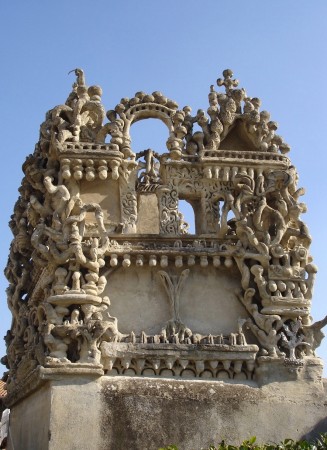
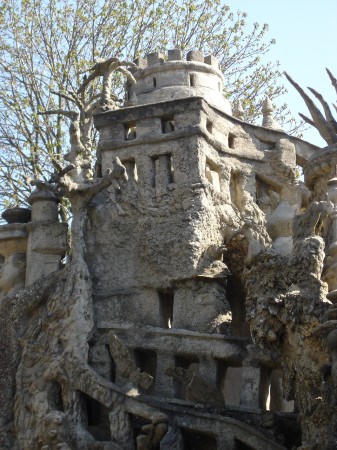
The French postman who built his own rock castle

What you're looking at was all built by one man, a humble civil servant with no architectural training working only with his hands and carrying each stone home himself.
Ferdinand Cheval was a postman in Hauterives, France, a tiny community with a population all of 1500. In 1875, Cheval was making his postal rounds when he tripped over a stone (ready your psychedelic jokes) and became inspired to collect stones and build his own palace, which he called "the Palace Ideal."
He then proceeded to spend the next 33 years doing just that. Solo, without help, mixing his own mortar, carrying stones to the site with a wheelbarrow, and working by lamplight at night so as not to interfere with his day job.
Make no mistake - while Cheval had no training in art, his palace is a breath-taking structure of intricate detail mixing styles of architecture from Hinduism and Christendom. Having competed the work to his satisfaction in 1912, he sought to be buried there, but discovered that French law wouldn't allow this request. He then proceeded to build his own mausoleum in exactly the same fashion at the local cemetery, taking another eight years to finish it.
Having completed this final project, his most obstinate excellency retired to his palace for exactly one year, to be honored and recognized by such international artistic talents as Andre Breton and Pablo Picasso. Many came to visit and interview him. Then, he died in 1924, and was buried at his mausoleum. Because a man can't just sit around!
The palace is today a national landmark of France and a tourist destination. Find out more here.

Tuesday, December 18, 2012

World-record house of cards builder


Well, the holidays always seem to bring out the odd hobbies in people, right? You may find yourself in an idle hour or two over winter break with a deck of cards in your hand. If so, and you undertake to build a structure of some sort, realize that you have already been beaten forever by this man.

Saturday, December 1, 2012

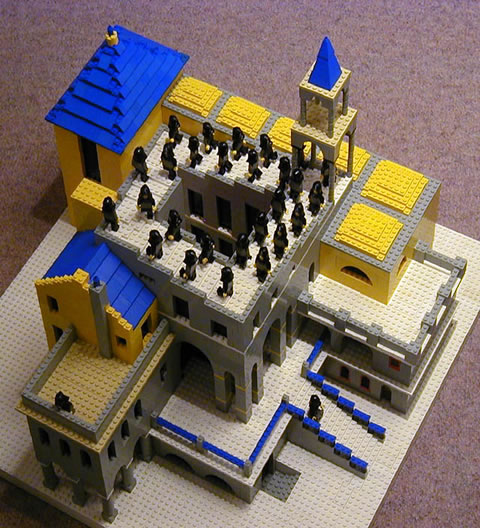
M.C. Escher's models made possible

The iconic artwork of M.C. Escher features impossible structures that defy geometry. But they're all too possible if you "think stretchy" and view them from only one angle...


Wednesday, November 28, 2012

Karni Mata, the Hindu Rat Temple


There's a lot more videos on YouTube where that comes from. The temple of Karni Mata comes complete with silver gates, marble carvings, hundreds of hidey-holes, and that stylish checkered flooring (pity the poor sap that has to clean it!).

Supper time for the well-tended-to rats:


Hindus and animal-housing temples just seem to go together. There's also the Ubud Monkey Forest and temple in Bali, where they have so many temples it's all you can do to find a non-holy place to pee (unless they have a special pee temple too?).

Saturday, September 22, 2012

Artist creates wind-powered walking creatures, for no apparent reason

Theo Jansen is a kinetic sculptor in the Netherlands who creates his own skeletal walking beasts, and this is one of his contraptions:


Jansen frequently turns his mechanical beasts loose on beaches and other wide, flat areas. One can only imagine the thoughts of the unprepared beach-goer who flips over from their restful tanning only to find one of these behemoths bearing down on them.

Jansen's own site features a video on the front page which is even greater in its grace and beauty. These kinetic sculptures, made from PVC pipe, wood, and recycled plastic bottles, are able to power themselves by wind. Not only can they walk, but some models can even sense when they're staggering into water and steer away, while others anchor themselves down if they detect a storm approaching.

Jansen intends to develop prototypes until he has models robust enough to turn loose on the beaches of the world to live out their own lives. If he does, these engineered organisms could well prove to be a phenomenon for generations to come. Perhaps, even after life on Earth is no longer feasible for other life forms and humans have long abandoned the Earth to its fate, there will still be the Strandbeasts, busily striding about on the sand, the last inheritors of the Earth.

Thursday, August 9, 2012

The Bizarre Images of the temple of Seti I, Abydos


Seti I was a pharaoh in the 19th dynasty of Egypt, the son of Ramesses I and father of Ramesses II. His temple is located in what is known today as the sacred city of Abydos, Egypt, which is considered one of the most important archaeological sites in Egypt. The walls are decorated with a host of inscrutable hieroglyphics, including a catalog list of the cartouches (symbols or seals) of every Egyptian pharaoh before him.

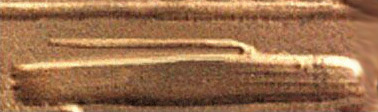
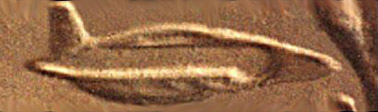
What grabs the attention of modern onlookers, however, is the uncanny resemblance between some of the symbols on the walls and modern inventions, including helicopters, submarines, and zeppelins:


This oddity has fed rumors of ancient aliens or time-travelers on the usual sites. However, there are perfectly mundane explanations for these figures, in that they aren't really detailed to begin with, have decayed several centuries, and could be depicting perfectly ordinary everyday objects of the time, or perhaps, like the sketchbooks of Leonardo da Vinci, been a particularly bright attempt at imaging the future. After all, our modern flying machines do indeed resemble natural flying creatures, and if any preindustrial artist would have been asked to imagine a man-built flying machine in the future, very few could argue against designing something that looks fairly like what devices we have today. You wouldn't imagine that an airplane shaped like a fish or turtle could fly, could you?

The complete diagram of the temple:

 Abydos became a popular necropolis in ancient Egypt, containing many temples and burial sites devoted to Egyptian royalty. This has also led to the general area becoming a focus for all sorts of cult and superstitious activity throughout the decades. More research into this intriguing historical area here.

Tuesday, July 3, 2012

Beyond Mein Kampf: Three books by dictators

1. Quotations from Chairman Mao


Published from 1964 through 1976, and still a popular read in much of the People's Republic of China, this is a collection of parts of speeches, letters, and general utterances of Chairman Mao Zedong. It was commonly known as the "Little Red Book" and also featured many images from the life of the Chairman. At one point, it was more prominently displayed than even images of the Chairman himself. While it was not required reading for the population, it was commonly printed in small pocket editions, so it could be with one always, and issued to soldiers and other grunts, even, presumably, throughout the Great Chinese Famine.

2. The Green Book


Published in 1975 until right around the Libyan Civil War in 2011, this was a small collection of Libyan dictator Muammar Gaddafi's thoughts on all matters political. It was said to be directly inspired by Mao's "Little Red Book". Unlike that book, The Green Book was published with the intent of making it required reading for all Libyan citizens. Libyan children during Gaddafi's reign had to study the book for two hours per week as part of official school curriculum. Quotes from the book were also broadcast daily over the official radio stations. Billboards were everywhere with quotes from the book. Can you say "citizen brainwashing"? Revolutionaries burned the book at protests and its since become quite a rare publication since the overthrow of Gaddafi.

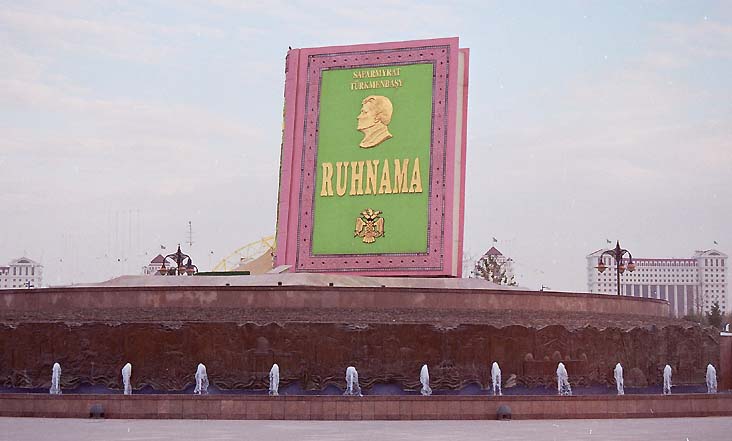
3. The Ruhnama


We have now reached the epitome of batshit egomania. This book, roughly translated as "The Book of the Soul", was the work of Saparmurat Niyazov, "President for Life" of Turkmenistan until his death in 2006. This was just a little bit more than a run-of-the-mill political rant. Example:


That's a real giant statue of the book, elevated on a rotunda surrounded by bubbling fountains. Here's some people around it for scale:


No, wait, we're not done. Every evening, the giant damned thing opens and displays text and plays video! Here's a video showing the construction of this behemoth, and showing it in action:


Yeah, eat your heart out, Stephen King.

The Ruhnama is not just a political tract, but spiritual scripture and autobiography of Niyazov himself. Required reading in school? That's small potatoes! Reading from the book took you from kindergarten to college in Turkmenistan. You couldn't publicly criticize the book without being thrown in prison and tortured. To make more room in the schedule for studying the Ruhnama, algebra, physics, and phy-ed were removed from the curriculum. You'd have to pass a test on the Ruhnama to get a driver's license. Quotes from the thing are inscribed in half the hard surfaces in Turkmenistan. Posters of the Ruhnama flank the streets. By law, it has to receive equal treatment with the Qur'an, even in Muslim mosques.

Shortly before his death, Niyazov claimed that he had arranged it with no less than GOD HIMSELF that anybody who read the Ruhnama three times was guaranteed a place in Heaven.

We could go on all day, all night, and all day tomorrow about the blood-curdling insanity and megalomania of Saparmurat Niyazov and the utter hell-on-Earth of a nightmarish, dystopian, totalitarian dictatorship this human piece of shit imposed on his imprisoned citizens (who were restricted from legally exiting the country), but this page on traveling Turkmenistan gives you a very good taste of it.

It is fitting that the Internet-fabled "Door to Hell" (a natural gas fire that has raged for 40 years) is in Turkmenistan. How come we've heard all about Kim Jong-Il and Saddam Hussein, but never Niyazov?

Wednesday, June 6, 2012

The Tiniest Act of Real Estate Defiance


The concept of real estate, approximately 10,000 years old, tends to bring out the pettiest stubbornness in people, almost raised to a heroic degree. In New York City, there is a tiny triangle set into the sidewalk in front of a cigar store at the corner of Seventh Avenue South at Christopher Street, which is dedicated to an old real estate dispute. David Hess owned land there once, with an apartment building which was condemned to be torn down to make room for the subway. Hess hung onto only this 500 square-inch triangle, which was commemorated with the mosaic. The property was sold after his death in 1938, for the sum of $1000.

At the time of Hess's ownership, it was the smallest piece of real estate in New York.


The legal concept here is "eminent domain", in which a governing entity has the right to simply take over any land within its borders, real estate titles be damned. So for those of you who think you "own" real estate, think again. On the other hand, such policies are necessary to prevent private landowners from seceding from their government to form their own tiny sovereign nation.

Monday, May 28, 2012

Eight Artifact Designs That No Longer Serve A Purpose

You never notice them until someone points them out. Because they've always been that way. But once you know about them, you can't help but notice them, and appreciate how ridiculous we are in the way we have to keep things familiar.

These are all design elements on various things which used to have a function, but are now done "just for decoration" or because "we've always done it that way".

1. Slot Machine Payout Tray / Hopper

Slot machines originally both accepted and paid out cash. Modern slot machines pay out a printed receipt which you then cash at the cashier's cage. They no longer need the tray where the coins used to land, yet slot machines still have them. Some of them even play a recording of coins hitting the tray when you cash out and the machine prints its receipt!

2. Cigarette Filter Design


Cigarettes used to have filters made from cork. When they switched to synthetic filters (usually made from cellulose), they kept the printed paper on the outside in a cork design.

3. Hood Scoops


Originally, hood scoops were necessary to direct the flow of air onto the engine to help cool it. Modern cars now have air ducts from other, less intrusive parts of the car, but some cars still keep the hood scoop design. If your car has a hood scoop, put your hand in it. It may be completely closed off!

4. Fake Wood Grain Covering


Things like shelf paper, tabletops, and counters may be made of plastic, metal, or even processed particle board, but they'll still have this tacky vinyl covering with fake wood grain on it. Once you're aware of it, you'll get tired of looking at it.

How about those station wagons in the 1970s which had fake wood paneling on the sides? These things persist even when they make no sense. Who would even want to drive a wooden car?

5. Hubcap Spokes


Ever notice how many car hubcaps still have spokes in the design, as if you were still unable to deal with the concept of a tire unless it resembled a Conestoga wagon wheel?

6. Digital Camera Shutter Sound


Like the casino hopper sound, consumer-grade digital cameras still play an audio sound of an old-fashioned camera's shutter sliding and clicking.

7. Your Keyboard Layout


The standard "QWERTY" layout of the keyboard was originally designed partly to keep neighboring typewriter keys from jamming when they hit together. Other keys' placement were originally required by the limitations of manual typewriter design - for instance, the 'CAPS LOCK' key is directly over the left shift key because it used to be a physical lever that held down the shift key itself; it would lock in place until you tapped it again. Modern computers and laptops have no such requirements, of course, but the keyboard stays that way.

A whole new generation of design appendixes evolved from the first generation of computers, too. The 'scroll lock' key, for instance, comes form the days when text-only computers scrolled monochrome text on a black monitor - you'd print something out, and then hit scroll-lock to freeze the screen until you could read that screen-full of text, and then release it to get to the next screen-full...

8. Computer And Phone Icons


Computer and phone icons are a virtual forest of visual metaphors for outdated technology. Look at that hourglass! How many of you have seen one in real life? Yet we use it to symbolize time, clocks, waiting, etc. And then there's those quill pens used for writing apps, envelopes used for email apps, cartoon speech bubbles used for texting apps... How about that floppy disk icon to represent the concept of saving a document? Floppy disks have been out of common use for at least a decade now.


Friday, April 20, 2012

Having a monstrous time in Bomarzo


Scenes of nightmarish chaos form the attractions at this park in Lazio, Italy. The place is known as "The Park of the Monsters", and though you might think that fascination with monsters - to the extent of building monuments to them - is a recent idea, this park dates to the 16th century.

Sculptures include Cerberus, Pegasus, Proteus, plus many other figures of mythology, random bears, dragons, and other large brutes, and one particularly grotesque face whose gaping mouth forms a gate. Also, one house purposefully built to lean several degrees to the side, in case you thought the Tower of Pisa was the only tilted building in Italy.


Saturday, March 10, 2012

A Different America With Different Entertainment: Disney's Adventure Through Inner Space


Speaking as a former Southern California mall rat, one of my favorite experiences from childhood was riding the "Adventure Through Inner Space" ride at Disneyland. They shut it down in the mid-80s to replace it with Star Tours - albeit, also a great attraction. But not the same. And it marked the point of cultural sea change in the United States between its peak and its decline. Here is the Yesterland page mourning its passing.

ATIS was a science fiction ride. In it, we use the excitement of cutting-edge (for the time) science to instill a sense of wonder, through the fantasy element of entering a magic microscope which makes you smaller. The cheery 1950s' song "Miracles From Molecules" greets you as you exit the ride - literally, the message is that the road to future Utopia was paved with scientific progress.

Star Tours is just about the Star Wars franchise and - there will be no way to avoid angering fans so I'll just say it - Star Wars is NOT science fiction. Star Wars is space opera, a Western cowboys-and-indians shoot-em-up set in space. Gone is the enthusiasm for science and the inspiration to look to a better tomorrow; instead the story, set "a long long time ago" is a Gothic post-modern fairy tale. What a poignant indicator to mark the shift in US culture! We gave up on getting into space ourselves - here, here's a fairy tale about how space politics would be just as messed up as US politics anyway. Enjoy your sour grapes.

ATIS sounds incredibly lame to modern kids, sounding more like a hyperthyroid science fair project than a ride, and that just goes to show how our modern culture has broken the present and new generations. To a six-year-old, years before the era of CGI effects, ATIS was scary. As you waited in line, they make it look like shrunken passengers were proceeding to the end of the microscope phasing into nothing. It was a stunningly realistic effect. The cars look like they go right up there. Near the end, a huge human eye peers down on you. The ride is mostly in darkness, with bright flashing lights all around you simulating thrilling interactions on the atomic level.

But all of this would be pretty pedestrian without the hypnotic voice of Paul Frees. As the narrating scientist, he commands your attention and shapes your thoughts with lines like "I am the first person to make this fabulous journey!" and "What compelling force draws me into this mysterious darkness--can this be the threshold of inner space?" and "No, I dare not go on. I must return to the realm of the molecule, before I go on shrinking...forever!" Frees could sit down to the breakfast table and describe his bowl of cereal and make it sound too epic for mere mortal minds to face.

Sadly, no actual video footage of this iconic and original ride exists, since it was shut down before the age of cheap video recorder cameras. But one fan, name of Steve Wesson, has devoted eight years to recreating it in 3D computer-modeling animation, and it is very close to my memories of the ride:


The architecture around the ride itself was a feast of googie nostalgia. Read that carefully, that's "googie" not "Google". "Googie" is the style of retro-futurist pop-art style, common around the general Disneyland area of Southern California. Check the definitive page on the Googie style here.

Can there be any more compelling argument that the United States gave up its dreams than that rides like ATIS and styles like googie now seem quaintly outdated? We used to look forward to the future - it was filled with exciting things and it made all the kids want to be scientists so we could get there as soon as possible and have out flying cars and robot maids. But our attitude towards the future changed from optimism to pessimism right about in the mid-80s. Cyberpunk came along, and with it came the cynical attitude that now said, "It wouldn't matter how much technology we invent; humans would be the same degenerate garbage anyway."

Right here in Iowa, we had yet another march in protest of a proposed bill that would allow exploration of building nuclear power facilities. Protesters dressed as zombies and marched on the state capitol.

I cried when I saw that story. Those zombies are no joke to me. The zombies want us to be governed by books that are thousands of years old. The zombies hate science and learning and love backwardness and repression. The zombies can't deal with sex or education or a president of a different race. The zombies will be here soon to snatch this computer out of my hands and take away my car, forcing us all back to the iron age to trod barefoot through the mud building pyramids while zombies crack a whip over our backs. The zombies are in power. The zombies own America, and the few remaining humans are scrambling to throw off their oppression or escape to a free land.

The United States has become a nation of zombies, dead things shambling forth to steal away the space-age, atomic-powered future promised to me in my childhood by Paul Frees and his Adventure Through Inner Space.

Sunday, February 19, 2012

The Mystery of Mont Sainte-Odile


An ancient monastery has stood in the low mountains of Alsace, France, for 1,200 years. It is celebrated for its beauty and is a must-visit stop on every scenic tour. It is encircled by a wall, known as the "Pagan Wall", composed of 300,000 blocks up to three meters tall, itself dating back to the 7th century AD. It was also the site of the crash of Air Inter Flight 148 in 1992, which killed 87.

But its history also contains an intriguing episode of daring-do. For, just after the turn of the century, books began to disappear from the Mont Sainte-Odile library. Over a two-year period, over one thousand books vanished, many of them priceless relics dating back to the 15th century, some with wooden covers and weighing several kilograms.

Now, this was no small theft. The monastery is secluded, perched atop rocky peaks, surrounded by a wall, and furthermore is inhabited by the priests. Yet over the years, as a new book disappeared every day or so, they could not find the elusive thief. Locks were changed, steel doors were reinforced, and yet the thefts continued, the phantom thief never leaving a trace except for one single rose he left one night just to taunt them. It wasn't until the historic monastery turned to modern technology that the thief was finally caught.

In June of 2003, a hidden video camera tripped up one Stanislas Gosse, aged 33, from the nearby town, who had been squirreling the books away in his home attic. He had discovered a secret route into the monastery from studying old maps at a public archive. A cupboard in the library let into a secret chamber, and a narrow stairway leading to access via climbing the wall.

His motive?

"It may appear selfish, but I felt the books had been abandoned. They were covered with dust and pigeon droppings and I felt no one consulted them any more."

Saturday, December 10, 2011

The mysterious architectural cult of Sheela Na Gig


All over Ireland and Great Britain are found enigmatic carvings of female figures displaying prominent genitals. Usually the figures are hunched, squatted, or crouched down, stretching their labia with their hands in a gesture that reminds one of the Internet's "goatse" meme (just with a different orifice).


Oddly for its brutally grotesque and exhibitionist attitude, the figure's motif is often found in church architecture, as well as decorating castles and other historic buildings. The mysterious part is that nobody can say for sure why, or how it incorporated itself into European architecture. It appears in history starting about in the 12th century. It is found in France, Spain, Scandinavian and Slavic countries.


Scholars heatedly debate the lineage of the figure. It is variously said to be Pagan, Wiccan, Celtic, or even related to South Seas fertility symbols. This historian makes a strong case for linking Sheela Na Gig with the mythical crone archetype. Meanwhile, fan pages are all over the web, such as this Tripod site devoted to Sheela Na Gig (Tripod sites themselves being a historical anomaly).


But the grandma of all Sheela Na Gig sites is sheelanagig.org, a vast resource dedicated to tracking down and exploring every corner of this strange mythos. Is it a fertility figure, a deity, an erotic symbol, a gargoyle, a demon, or a reminder of both birth and death? Perhaps, like all mind-blowing art, it is all of these, open to whatever meaning the viewer wants to project.