Showing posts with label geology. Show all posts

Thursday, July 25, 2013

Norwegian town engineers mirrors reflecting sunlight to shine into town during dark winter months


I know this isn't the first time this has been done, but the town of Rjukan, Norway, is installing mirrors on top of local mountains to reflect light into the town square during the sunless winter months of the far north.

I always love stories like this, because they show off the clever audacity of the crafty ape we call man.

A related concept is that of daylighting, where architectural measures are taken to treat buildings with natural sunlight where possible.

And I mentioned this has been done before; specifically, in Viganella, Italy, mirrors were constructed on local mountaintops to reflect sunlight into the city's valley, which, due to the depth of the valley, was resigned to shadows for so long in the year. Here's the trailer for the documentary about Viganella's mirror:

Oh, and the town of Rattenberg, Austria, also did the same thing, for the same reason as Rjukan.

Saturday, July 20, 2013

Who built the ruins on Malden Island?

Malden Island is a tiny uninhabited dot of land sticking up smack in the middle of the Pacific Ocean, part of what is today the Republic of Kiribati. It was discovered by a British sea captain in 1825. And upon discovery of this tiny ~15 square-mile island, a mystery was born.

Specifically, the uninhabited island was the site of many stone structures, including the ruins of "temples" or at least monolithic, temple-like structures. Nobody knows who could have put them there. To this day, your theory is as good as anybody else's.

Very little else is known about or written about this site; however, I did find one crackling good conspiracy theorist who classifies it as 'forbidden archeology.'

Sunday, June 16, 2013

Sleeping Mother Earth

From the tourist info:

"The Madre Tierra Eco-Resort is located a mile from the center of Vilcabamba, the Andean village made famous for the longevity of its citizens. Visitors come from all over the world for the relaxed atmosphere, the deliciously healthy food from our gardens, the mineralized pure water, the fresh, clean air and to spend time among Ecuador's very gentle people."
And this creation, sleeping mother earth personified.

Tuesday, March 5, 2013

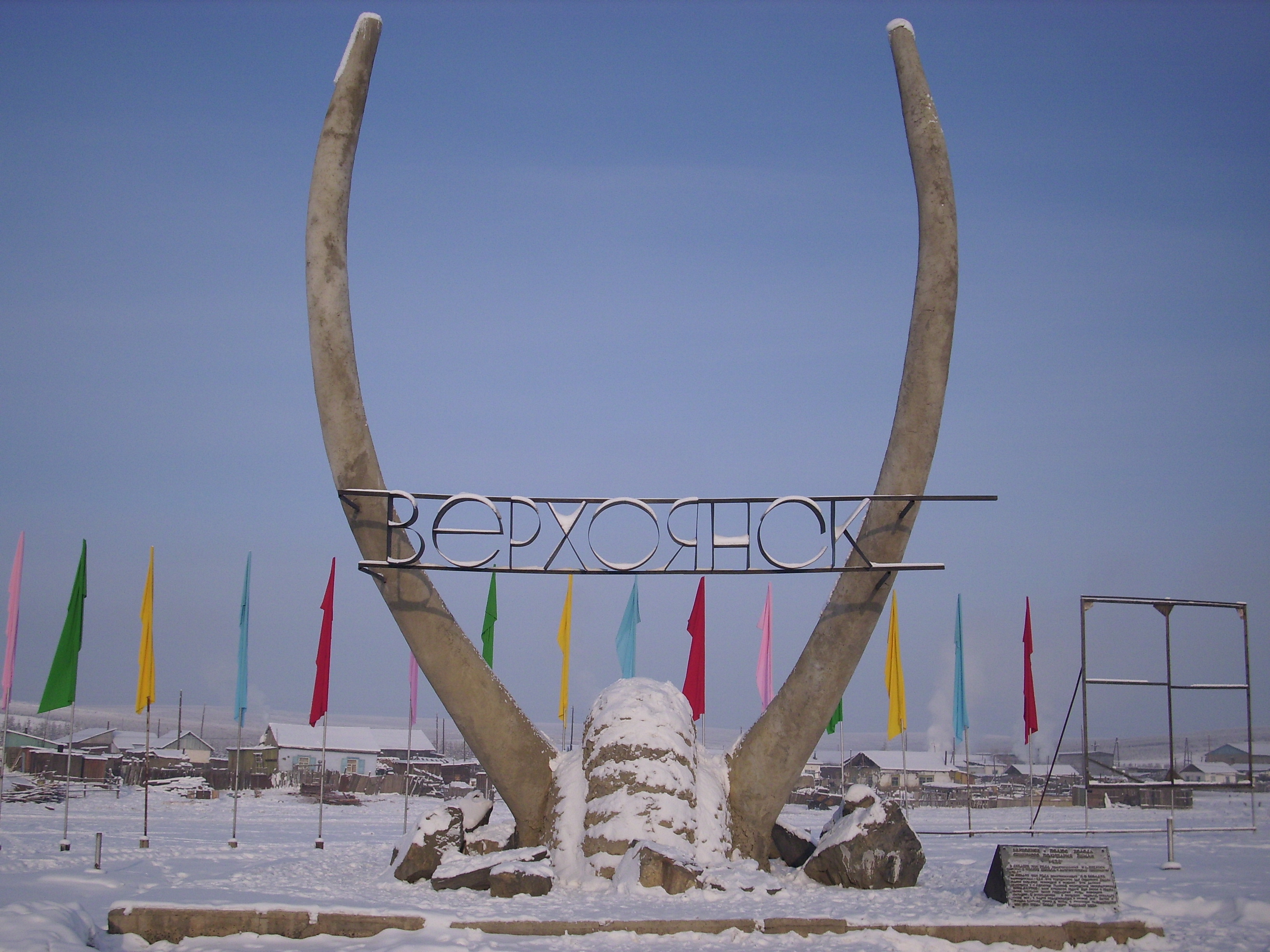
Think your winter's bad? Be glad you're not in Verkhoyansk!

Verkhoyansk, in the Sakha Republic of Russia, is within the Arctic circle and considered close to the coldest pace on planet Earth, being one of the "cold poles", with temps running below freezing October through April and as low as -49-degree F in January.

Here's the town, competing with the other "cold pole" ( Oymyakon ) for title of "coldest place on Earth. The lowest temperature in Oymyakon recorded was -67.7 degrees, but Verkhoyansk citizens say that's nothing, their lowest temperature was -67.8 degrees. I'll bet the citizens of Verkhoyansk like to poke fun at Oymyakon by going over there and unzipping their parkas going "It's so hot here, how can you stand it?"


Wednesday, August 8, 2012

The mystery radiation burst of ~774-775 A.D.

 
During a time when very few humans would have had the presence of mind or equipment to detect such an event, one species faithfully recorded this freak occurrence for our puzzlement millenniums later: Japanese ceder trees. The evidence of this event is told by the pattern of tree rings in this species, which shows a huge anomaly right around this time in history. There is a massive amount of activity from carbon-14, an element only presented when massive amounts of radiation from space bombard earth's atmosphere.

Sometime around 774 or 775 A.D., a mysterious burst of radiation hit the Earth. We have no idea what caused it, where it came from, or why it went otherwise undetected.

A supernova would be a possible explanation, but early astronomers show no record of such an event visible from Earth during this time, despite having noted supernovas in 1006 and 1054. For that matter, we'd still be able to find evidence of a supernova from this time today. A solar flare could also explain it, but again no solar flare of such a large and devastating nature would have come and gone without somebody noticing it. If you're picking up the theme here, huge bursts of radiation have to be caused by a star or something as big and hot as a star.

Other tree species around the world, as well as ice core samples from the polar regions, bear a similar record about the same time period in history. So either we had an invisible, undetectable solar flare or supernova, or we have a bunch of lying trees on our hands.

Sunday, June 10, 2012

77,000 Years Ago, Humanity Was Almost Wiped Out By A Volcano


What you see here is Lake Toba, a donut-shaped lake which now fills the crater left in Sumatra, Indonesia, when a supervolcanic eruption happened about 77,000 years ago. This eruption blasted volcanic ash into the Earth's atmosphere, coating the entirety of South Asia in a 15-centimeter blanket of ash, as well as depositing ash over nearby oceans and seas. This resulted in a volcanic winter over the Earth, which lasted for as long as a decade, and potentially brought about a millennium-long global cooling event as well.

During this time, it appears that most of the human race was wiped out, with the population count getting as low as 1000 breeding pairs of humans.

In 1993, scientist Ann Gibbons first hypothesized that the bottleneck in human population, followed by the Pleistocene population explosion, could have been linked to the Toba event. Geneticist Lynn Jorde, in this BBC interview on supervolcanoes, echoes this idea:

"Our population may have been in such a precarious position that only a few thousand of us may have been alive on the whole face of the Earth at one point in time, that we almost went extinct, that some event was so catastrophic as to nearly cause our species to cease to exist completely."

In a population bottleneck, as the graph on this Wiki shows, a vast majority of a species is killed off, leaving only a few stragglers to either adapt and proser, or perish.

The possibility exists that such a global catastrophe could nudge along natural selection in favor of intelligence. It does stand to reason, after all, that if some disaster wipes out most of humanity, that the smarter folk will have a better chance of survival, by both being better prepared and being better at adapting new survival strategies during the ensuing fallout.

Wednesday, June 6, 2012

The Tiniest Act of Real Estate Defiance


The concept of real estate, approximately 10,000 years old, tends to bring out the pettiest stubbornness in people, almost raised to a heroic degree. In New York City, there is a tiny triangle set into the sidewalk in front of a cigar store at the corner of Seventh Avenue South at Christopher Street, which is dedicated to an old real estate dispute. David Hess owned land there once, with an apartment building which was condemned to be torn down to make room for the subway. Hess hung onto only this 500 square-inch triangle, which was commemorated with the mosaic. The property was sold after his death in 1938, for the sum of $1000.

At the time of Hess's ownership, it was the smallest piece of real estate in New York.


The legal concept here is "eminent domain", in which a governing entity has the right to simply take over any land within its borders, real estate titles be damned. So for those of you who think you "own" real estate, think again. On the other hand, such policies are necessary to prevent private landowners from seceding from their government to form their own tiny sovereign nation.

Thursday, May 31, 2012

Where the world turns psychedelic...


One might wonder, upon visiting the various locations of Danxia in China, if this is the part where God dropped acid. The various landforms are formations of limestone and sandstone which have been eroded or carved by glaciers. Between the trippy colors and the bizarre shapes, one could have easily gotten away with filming a few episodes of Star Trek here.


Friday, May 4, 2012

How various animals react to an earthquake

On August 22nd, 2011, a 5.8 earthquake hit Washington, DC, home to the Smithsonian National Zoo. While mostly non-destructive, it did rattle a few cages and nerves. This afforded a rare opportunity to observe the various animal's reaction to the quake.

  • About five to ten seconds before the quake, many of the apes abandoned their food and climbed to the top of the tree-like structure in the exhibit.
  • The red ruffed lemurs sounded an alarm call about 15 minutes before the quake and then again just after it occurred.
  • All the snakes began writhing during the quake.
  • The ducks immediately jumped into the pool.
  • The beavers stopped eating, stood on their hind legs and looked around, then got into the water.
  • The lions all stood still and faced the building, which rattled during the quake.
  • The flamingos rushed about and grouped themselves together, where they remained huddled during the quake.
  • The deer immediately ran out of the barns and appeared agitated during the quake.
  • The giant pandas showed no reaction whatsoever.

In addition, after the quake several animals began vocalizing in alarm and annoyance, notably an orangutan, the howler monkeys, and the female deer.

Here's a news story reported after the incident, with naturist Jeff Corwin:

Wednesday, April 11, 2012

Six Specimen Of Remarkable Trees


Since my earlier post about California sperm trees, I decided to round up a list of trees that are mind--blowing in other ways...

Arbre du Tenere


A solitary acacia tree which was once regarded as the most isolated tree on Earth. It grew in the Tenere region of the Sahara in northwest Niger, over 400 KM from the next nearest tree. It was so famous that it was used as a landmark for traveling caravans. In 1973, a drunk driver managed to kill the tree by running over it with his truck. How you get so drunk that you manage to mow down the only tree for 400 KM on a flat desert is beyond explanation.

Great Banyan


In terms of sheer ground cover, this is the world's largest tree. Residing in a botanical garden in India, this species of Moraceae is over 250 years old and spreads by the method of dropping areal roots from its branches, creating an effect that looks like a whole forest rather than one tree. It covers an area of about four acres and has a road encircling it that is 330 meters circumference, but the tree continues to grow past even this boundary. Banyan trees around Asia routinely become objects of legend for their extreme age and spread.

Pando


In the Fishlake National Forest, Utah, there is the quaking aspen colony of trees which are all fed by a connected root system and thus count as a single clonal colony tree. This means that the tree just keeps spreading out roots, the roots shoot up more trees, and so on. This makes it count as the world's heaviest known living organism weighing over 6,600 short tons. It is also one of the oldest known living organisms, estimated at the age of 80,000 years old. This makes it older than the entire history of the modern homo sapiens (us) species. Given that the colony can even survive forest fires by simply replacing the trees with new stands from its roots, it could simply be immortal. 

Hyperion


Hyperion is a coastal redwood growing in Redwood National Park in Northern California. It is the tallest tree in the world at 379 feet tall at last measure. Redwood National Park is also home to many giant trees, including the famous one that you can drive a car through. Standing amid a Northern California Redwood forest can make you feel like a fairy-tale dwarf.

The Moon Trees


There is nothing remarkable about the moon trees, except that they are planted from seeds which NASA took into moon orbit on the Apollo 14 mission. The idea was to take tree seeds into space, bring them back, and plant them next to other trees to see if they develop differently. No significant difference has been seen in them some 20 years later. They constitute five different species, planted in various locations around the US, and some of them have even been given away.

The petrified trees of the US


There are several petrified forests declared as national parks in the United States, in Washington, California, Arizona, and Mississippi. While the trees are no longer standing, they are the fossilized remains of once-living trees now turned to solid stone, in a process called "permineralization". Petrified wood is the only instance of fossilization in which a 3D specimen of the organism is preserved. The various forests date back to some 255 million years ago.


Friday, March 23, 2012

Nuclear Reactions Happen Naturally Too


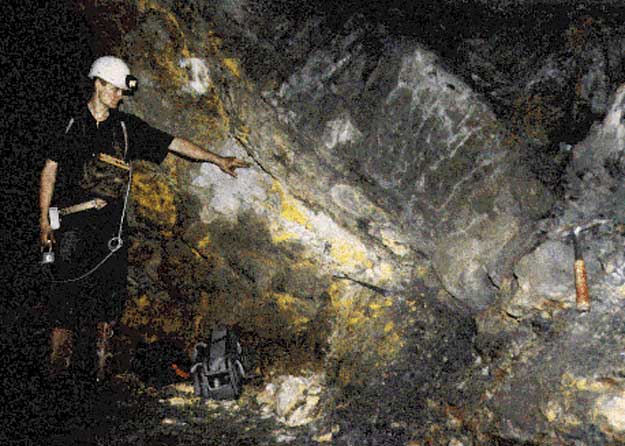
Shown: The discovery of a 2-billion-year-old naturally-occurring nuclear reactor in Oklo, Gabon, Africa. What happened was that a uranium deposit in Precambrian times was triggered by groundwater seeping through sandstone. A chain reaction would initiate, boiling the water away, which would then cool the reaction but allow more water to seep in and repeat the cycle. The process apparently kept going for hundreds of thousands of years,

Oklo is the site of the only known natural nuclear reaction. French physicist Francis Perrin discovered the natural phenomenon in 1972. The French mined out the uranium in the area until supplies were depleted, but geologists and physicists have continued to study the area for clues about what happened there millenniums ago.

A great little educational video on how nuclear energy generators work: