Wednesday, August 29, 2012

Blit, a Bell Labs computer with GUI capabilities from 1982


Fantastically nostalgic early precursor to our modern technical gadgets, even having voice simulation. Astounding how far we've come, and yet how well they envisioned the future!

More about Blit here.

Tuesday, August 28, 2012

Artist haunts us with Norwegian Tree Troll manifestation

From artist Kim Graham, who reveals that her Norwegian heritage, Montana upbringing, and viewing The Lord of the Rings inspired her to bring an authentic tree troll to life.


Sunday, August 26, 2012

The Internet needs a new patron saint!


Well, the current reigning patron saint of the Internet and computers in general is Saint Isidore of Seville, an Archbishop of Seville for more than three decades, and considered to be the last scholar in the ancient tradition. Based on this flimsy pretense and nothing else, this man, who died in the year 636 having missed even the invention of the Difference Engine by a millennium, was decreed to be the patron saint of the Internet, and all of computing technology, programmers, and students.

Mind you, this is the same guy who joined in the general Catholic persecution of Jews, by passing "Canon 60 calling for the forced removal of Jewish children from the parents and their education by Christians and Canon 65 forbidding Jews and Christians of Jewish origin from holding public office".

Internet users, programmers, and techie stemmers of all kinds - are you ready to join me in crying "bunk"?

BUNK!!

We have far better candidate for the patron saints of programming, computing, and Internetting:

Saint IGNUcious, the tongue-in-cheek alter-ego of Richard M. Stallman, founder of the Free Software Foundation and spiritual father of all software. Listen, if I stood them both up before Saint Peter at the pearly gates, I'd bet Isidore would be nervously shuffling his feet and eying the side exit before Peter was done reading the half of the list of Stallman's good deeds.


Tim Berners-Lee He got to be in the Olympic opening ceremonies through virtue of creating the World Wide Web, the improvement which opened the Internet up to the masses. That's gotta be worth a brownie point or two.

Ken Thompson and Dennis Ritchie, the inventors of both Unix and the C programming language. All modern operating systems - no matter how loudly Microsoft lies otherwise - descend from Unix, and all modern programming languages descend from C. I mean, literally the patron saints of computing and programming!

And finally, Douglas Englebart:

What, you don't know who Douglas Englebart is??? I explain in that link. He invented the modern GUI computing interface - the mouse, the icon, the menu, the graphical interface, hypertext... all the pretty pictures on the screen that let you use a computer without having to type in hexadecimal runes at a command prompt. Before Microsoft, before Apple, before even Xerox. And he did it all as research at Stanford university, way back in 1967. Now just look at that picture and that serene, beatific smile on that saintly face: doesn't he look like a saint?

Vatican, your choices suck! Each of the people I've named here did what they did in the genuine desire to benefit all of mankind by putting more computing power into the hands of the masses, potentially doing the human race more good than any ten canonized saints, and they all did it with no thought to their own profit or power.

If your religion can't recognize that these are the true saints, then there's something wrong with your religion.

Saturday, August 25, 2012

A month of Fridays brings bad luck


In a tense image only a conspiracy theorist (or Nicholas Cage fan - as if there were a difference) could love, artist George Widener captures 30 Fridays, with corresponding dates, when disasters hit. And one free day!


Tuesday, August 21, 2012

Mr. Yuk

A funny little series of PSAs created by Children's Hospital of Pittsburgh, to clearly label poisonous and toxic chemicals so tots don't drink it.


"When you see it, you'll know quick! Things marked Yuk make you sick! Sick sick sick! SICK SICK SICK!" It's a prime example of '70s surrealism, with what sounds like sound effects from an arcade game leading it off. (Yes, they had them in 1970.)

More about Mr. Yuk here. It's high time we made a meme out of it and ran it into the ground.

Monday, August 20, 2012

Becoming a real life oil painting


Yes, that's a model captured by artist Alexa Meade within a 3D oil painting simulation. Border between art and life blurs further. More here.

Saturday, August 18, 2012

Face the future blending of life and technology


With its haunting opening quote and mesmerizing imagery of half-organic mechanics set to beautiful music, this short film evolves the future where man engineers life directly. Indeed, there is no human or other recognizable life form present (with the possible exception of the end product), signifying that perhaps the machines that we leave behind us will continue to run without us after we are gone - and our machine-assembled descendants will awaken without knowing about us.

Or maybe it's already happened?

Monday, August 13, 2012

The Anomaly of Sudden Unexpected Death Syndrome

 
"Bangungot" is a word from the Tagalog language meaning "to rise and moan", but that belies the true terror of this word: it refers to a syndrome in which people mysteriously die in their sleep, with no previous indication that there was anything wrong with them. The name comes from the tendency of victims to cry out and thrash in their sleep before expiring.

Before you stay up all night in terror: It only appears to affect people of southeast Asia, including Thai, Hmong, and Filipinos, and then only young males of median age 33.

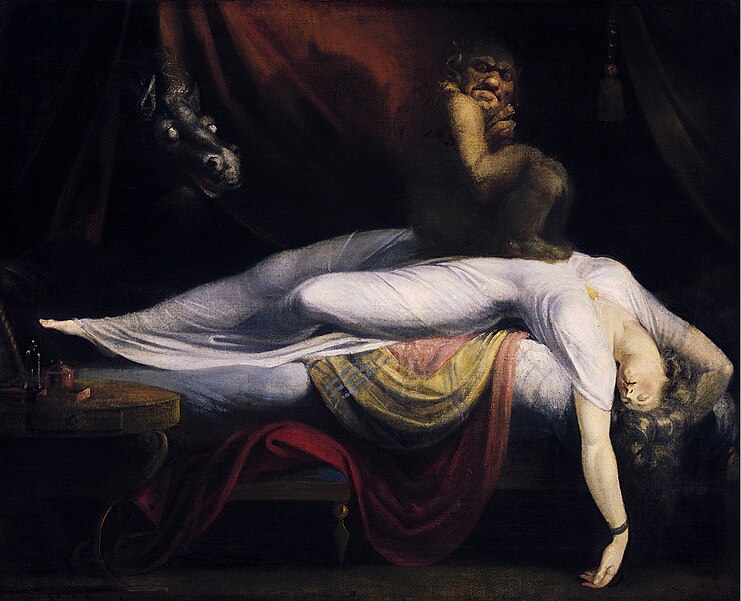
Medical research is beginning an inquest into this syndrome, but so far everyone's baffled. While the syndrome is well-known among these ethnic groups, it is shrouded in urban legends and old-wives' cures, said to be caused by everything from eating a heavy meal before bedtime to being visited by a vengeful female spirit, with a folk remedy of pinching the big toe of a sleeper as a preventative cure. It's even been culturally compared to the urban legends of UFO abductions in the US, and the old-world concept of a "night terror" or sleep paralysis, so eloquently depicted in Johann Heinrich Fussli's painting The Nightmare, shown above.

Of course, the idea that a scary dream that can actually kill you also is at the root of another pop cultural icon, the Nightmare on Elm Street series with the character of Freddy Kruger being a nocturnal assassin.

However, one possible clue to the syndrome's cause is that this tends to affect only refugees from those countries; people already undergoing a large amount of stress, who might naturally be subject to spontaneous cardiac arrests and related events.

Sunday, August 12, 2012

The mystery coffins of Arthur's Seat


Edinburgh, Scotland, is home to Arthur's Seat, a group of hills that forms most of Holyrood Park. One of its claims to fame is having been written about by author Robert Louis Stevenson, and another is speculation that it could have been the location of Camelot. But a third claim to fame is a mysterious find made in 1836, with implications macabre at best and chillingly creepy at worst.

In a cave on Arthur's Seat, five boys discovered 17 tiny coffins with wooden dolls. The dolls are about four inches long, their coffins carved from authentic pine and decorated with iron. The coffins were buried in the cave floor in neat rows of eight, the rows stacked one atop the other and the lone top coffin beginning a new row. All of the dolls are dressed individually, obviously representing different people. And perhaps the most unsettling detail of all, the coffins appeared to have been buried over a long-term period of time, with the top ones being fresher and the lower layers being more decayed, suggesting that they were installed over a period of years and weren't just part of a gruesome children's game. Since their discovery, they've had a history in and out of collector's hands and now in a museum.

No one knows anything else about their story. Speculations include the theory that they might have been representational burials for sailors lost at sea, but why then hidden in a cave and not identified? Every other theory suggests some form of magic ritual - perhaps magic by a Pagan sect, since Scotland has Pagans as part of its history. Or a murderer committing this act to appease the spirits of his victims? Dolls sacrificed by generations? Representation of the victims of Edinburgh serial killers Burke and Hare?

It should be noted that Burke and Hare were anatomy murderers, who committed their deeds for profit, selling the bodies to doctors who used them for medical instruction. Since the corpses were then dissected and studied for science, it stands to reason that no un-defiled body would remain, and the murderers, being financially motivated, would suffer enough guilt over their trade that they felt motivated to commit this token gesture of remorse.

It's impossible to think about them long without having the imagination run wild. If they don't feature as a plot device in some future horror novel or film, it won't be for lack of suggestion.

Thursday, August 9, 2012

The Bizarre Images of the temple of Seti I, Abydos


Seti I was a pharaoh in the 19th dynasty of Egypt, the son of Ramesses I and father of Ramesses II. His temple is located in what is known today as the sacred city of Abydos, Egypt, which is considered one of the most important archaeological sites in Egypt. The walls are decorated with a host of inscrutable hieroglyphics, including a catalog list of the cartouches (symbols or seals) of every Egyptian pharaoh before him.

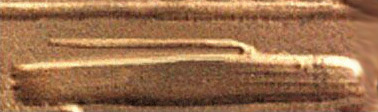
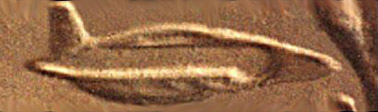
What grabs the attention of modern onlookers, however, is the uncanny resemblance between some of the symbols on the walls and modern inventions, including helicopters, submarines, and zeppelins:


This oddity has fed rumors of ancient aliens or time-travelers on the usual sites. However, there are perfectly mundane explanations for these figures, in that they aren't really detailed to begin with, have decayed several centuries, and could be depicting perfectly ordinary everyday objects of the time, or perhaps, like the sketchbooks of Leonardo da Vinci, been a particularly bright attempt at imaging the future. After all, our modern flying machines do indeed resemble natural flying creatures, and if any preindustrial artist would have been asked to imagine a man-built flying machine in the future, very few could argue against designing something that looks fairly like what devices we have today. You wouldn't imagine that an airplane shaped like a fish or turtle could fly, could you?

The complete diagram of the temple:

 Abydos became a popular necropolis in ancient Egypt, containing many temples and burial sites devoted to Egyptian royalty. This has also led to the general area becoming a focus for all sorts of cult and superstitious activity throughout the decades. More research into this intriguing historical area here.

Wednesday, August 8, 2012

The mystery radiation burst of ~774-775 A.D.

 
During a time when very few humans would have had the presence of mind or equipment to detect such an event, one species faithfully recorded this freak occurrence for our puzzlement millenniums later: Japanese ceder trees. The evidence of this event is told by the pattern of tree rings in this species, which shows a huge anomaly right around this time in history. There is a massive amount of activity from carbon-14, an element only presented when massive amounts of radiation from space bombard earth's atmosphere.

Sometime around 774 or 775 A.D., a mysterious burst of radiation hit the Earth. We have no idea what caused it, where it came from, or why it went otherwise undetected.

A supernova would be a possible explanation, but early astronomers show no record of such an event visible from Earth during this time, despite having noted supernovas in 1006 and 1054. For that matter, we'd still be able to find evidence of a supernova from this time today. A solar flare could also explain it, but again no solar flare of such a large and devastating nature would have come and gone without somebody noticing it. If you're picking up the theme here, huge bursts of radiation have to be caused by a star or something as big and hot as a star.

Other tree species around the world, as well as ice core samples from the polar regions, bear a similar record about the same time period in history. So either we had an invisible, undetectable solar flare or supernova, or we have a bunch of lying trees on our hands.

Sunday, July 15, 2012

Drug kingpin turns out to be huge comic book fan

Why am I not surprised? For those of you who have spoken with comic book fans you're met online and thus had cause, as have I, to wonder what makes them act that way, you now have a clue:


The man with the lazy eye there is one Aaron Castro, an amphetamine drug kingpin who was busted for drug trafficking in Commerce City, Colorado. Last year he pleaded guilty to felony charges and has now begun serving his 45 year jail sentence. Which brought Federal agents into possession of his personal property:

18,753 comic books.

Speculation runs that he was just trying to launder the money, rather than that he was that ape over comics. He even stored dope between the pages sometimes. The whole collection, residue or not, sold at police auction for $125,050.

I searched in vain for an image of the collection, or a follow-up to the auction story, or who ended up with the comic books. I mean, that's a cool eight of a million there in comic books, and at Sheriff's auction prices at that. Where will they go? Will any of them end up back in the open market? Should I sniff every comic book I find from now on just to check?

Thursday, July 12, 2012

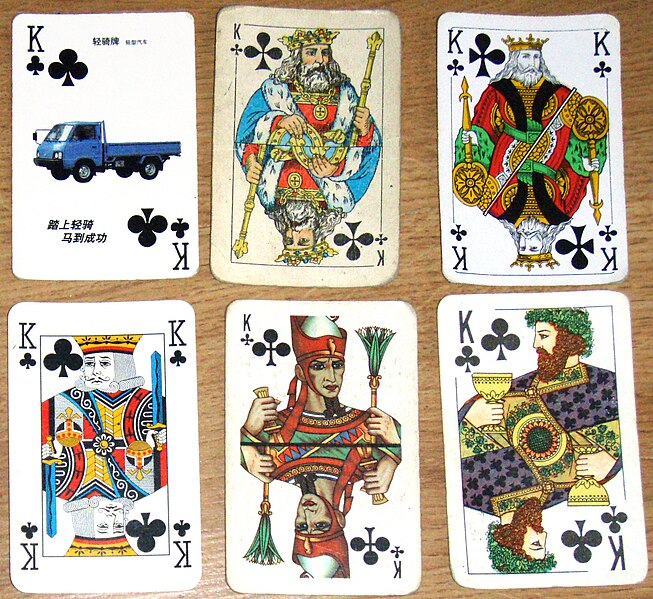
Amazing Playing Card Trivia


The cards directly invoke the days of the year. In a standard deck of playing cards, count ace=1, jack=11, queen=12, king=13, joker=1, and all of the other cards at face value. Without the jokers, the rest of the cards total 364. If we add in a joker (for April Fool's Day), we get 365. Add in the other joker (for Leap Day) and we get 366.

Discard the jokers and count the cards. There's 52, corresponding to the weeks in a year.

There are 12 face cards, corresponding to the 12 months of the year.

There are four suits, with 13 cards each. Each of the four seasons of the year has 13 weeks.

Within each suit, there are 13 ranks, corresponding to the months in the lunar year.

According to this source, Dmitri Mendeleev, creator of the Periodic Table of Elements, came up with the idea for the organization of the table as he laid out a tableaux of cards on a table while playing solitaire.

The only reason that the ace of spades gets a big, fancy design is because British royalty used to charge a special tax on cards, being a leisurely commodity. To show that the duty had been paid, a clerk would stamp one card in the deck. Because of the way cards were sorted and packaged, the top card just happened to be the ace of spades. Hence the expression "Duty ace".

Bonus buck: See my old open-source Flash card-shuffler here, though it's not much to look at. The link to my blog post includes an explanation and source code download for developers interested in using it for their own games.

Wednesday, July 11, 2012

The closest thing we'll ever have to Smurfs

Meet the Kingdom of the Little People. This is a village / amusement park in Kunming, Yunnan, China, populated entirely by the dwarfs of China. To qualify to live there, you have to be less than 130 centimeters tall (51 inches) tall. And the people who do live there put on shows, including various singing and dancing numbers and other live performances.


Tickets run about $10 in US dollars, in this bizarre attraction founded in 2009. From the tourism trade, the dwarf village is self-supporting enough that the residents can enjoy a commune lifestyle in a small town built specifically to their scale. However, by the daytime and showtime they pretend to inhabit a fake mock-up village that's supposed to look like mushroom-land...

...but looks more like a quarry of stone-age rockets if you ask me.

There's also a bit of controversy, with critics saying this is demeaning to people with dwarfism. Could be, but nobody's forcing them to live there. Also, dwarfs often find work in entertainment, quite a lot of it geared to small stature.

Sunday, July 8, 2012

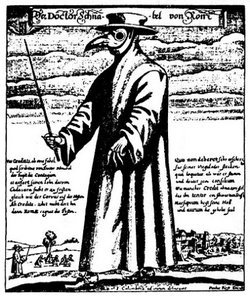
In the United States, 10 to 15 people still die from the black plague every year.

The Black Plague (actually known as the "Black Death") is a legendary outbreak of an infectious disease which peaked in Europe in the late 1340s. Many people have the misconception that that was the end of this grisly disease.

But oh, how wrong they be! In fact, the Black Plague continued to return for outbreak curtain calls throughout Europe and the Middle East well into the 17th century. A third wave pandemic started in China in 1855 and lasted for a century, spreading throughout the world. Furthermore, here is a map showing plague-infected animals as of 1998:

But there is still more glum news: In June of 2012, this story reports an Oregon man who is currently battling the disease. Mostly the Western US still reports 10 to 15  cases of the plague each year, which still resists antibiotic treatment in some cases, resulting in a fatality rate of 1 in 7.

Just a reminder that we can be wiped out today as easily as we were in past centuries. All it takes is one determined strain of bacteria.

Friday, July 6, 2012

The shocking difficulty of producing truly random numbers (and the world's most boring book)

Need some random numbers? The RAND Corporation has you covered. They published a book called "A Million Random Digits With 100,000 Normal Deviates". This 1955 work makes for some boring reading indeed; it's exactly what it says on the cover, no more, no less. Just columns of digits, which were simulated with a roulette wheel device hooked up to one of their mainframe computers. The numbers are arranged in strings of five digits, ten strings to a line, in neatly numbered rows numbered at the far left column from 00000 to 19999.

And if you want a copy, it's yours for - as of this writing - a used price of $33 or a new price starting at $76.67. And while you're at Amazon, don't miss the hilarious customer reviews, ranging from tongue-in-cheek drollery to one man who claims that the book was instrumental in him meeting his future wife.

Why would anyone want such a tome? Because TRUE random numbers are actually surprisingly hard to come by. Especially back in 1955. Even modern machines, however, are hard-pressed to come up with true entropy. True, you could sit there rolling a handful of dice all day and writing down the results, but this is slow. The best we can do is psudorandom numbers, generated from things like the system clock, user input, or the measurement of system voltage.

Why are random numbers so important? They are used in both cryptography and in gambling games - in both cases, it's a disaster if your number sequences become predictable. While pseudorandom numbers are fine for things like determining random events in a video game (such as which Tetris piece will fall next), they just don't cut the mustard for more mission-critical applications.


One such case is demonstrated in the lesson of the TV game show Press Your Luck, in which pseudorandom number sequences were used to generate a pattern of squares on a game board and the contestant would have to press a button to stop the board on a square, hoping to win money. As one determined contestant discovered, the patterns on the board were very easy to predict, and so when he got on the show, Michael Larson had an unprecedented winning streak.


Casinos, with electronic slot machines, Keno, poker machines, and so on, have the same risk. So do lotteries. And then so does any security application of cryptography - it doesn't matter how great my secret code is, if one can simply run the letters or digits through a frequency analysis and figure out that "36547" = "Washington". So the encoded information has to be combined with a bank of random numbers, used once, and thrown away.

There are a number of hardware random-number generators today, things like little frobs that plug into a USB drive and have things like a radiation-decay mechanism or an atmospheric noise microphone to get true natural entropy as input.

For students with test data needs, websites like RANDOM.ORG have downloadable random numbers produced from a microphone dangling in the breeze.

Thursday, July 5, 2012

Amazingly candid videos about the lives of conjoined twins Abigail and Brittany Hensel


Watch well, because this is one of the rare media appearances Abigail and Brittany Hensel were willing to make, back in 2006.

This is a pretty rare media appearance for them; they actually hate being famous and get tired of being stared at (one could hardly blame them). They are also a very rare case for being such a surgically inseparable set of conjoined twins and yet surviving into adulthood - complications often happen with cases like theirs due to shared organs.

To watch how they interact with both each other and the rest of the world, is to be amazed at just how relatively well-adjusted they are.

Here they are again at age 19 in 2010:


There's quite a bit more around the web about them.

Since the documentaries you see here, they have moved on to graduate high school and attend college in Minnesota. They have plans for the future, including marriage(s) and motherhood(s).

Wednesday, July 4, 2012

The Insect World Is An Alien World

Fantastic art video of a praying mantis and the predatory world it lives in.


If you've ever encountered a paying mantis in real life, these things impress you with how alert they are. They'll land right on your hand and turn around and look you right in the eye, challenging you to prove your sentience to them. If we didn't have praying mantises on our home planet, we'd be astounded to find them in space and instantly convinced of their intelligence.

Hopefully Blogger will cooperate with a non-YouTube video, but the thing is aparently only available on Vimeo.